What does it mean to design a master plan that will serve not just today’s needs, but the needs of generations to come?
In the first episode of our new Site Stories series, we take viewers behind the scenes of a project that challenged our team to think beyond the typical planning schedule, specifically seven generations worth.
This type of work was initiated by the Saint Regis Mohawk Tribe in Akwesasne, NY, who wished to leave behind something that would continue to contribute and benefit the community. Working alongside the Tribe, we explored how architecture, engineering, and master planning can create spaces that remain adaptable.
Master Planning: How It Started
Our work at the aptly named, “Generations Park” began on this property with a single project in the early 2000s. At the time, it wasn’t part of a larger plan, but each project that followed, including the AHA Senior Center, the Center of Excellence for Diabetes Care and Prevention, and the Saint Regis Mohawk Tribe Administration Building (Ionkwakiohkwaró:ron), helped to build trust and added on new layers to the site. Even before a formal master plan existed, decisions were being made with the future in mind and in leaving space for what could come next.
By 2017, that long-term thinking became more intentional with the development of a formal master plan, later refined in 2020.
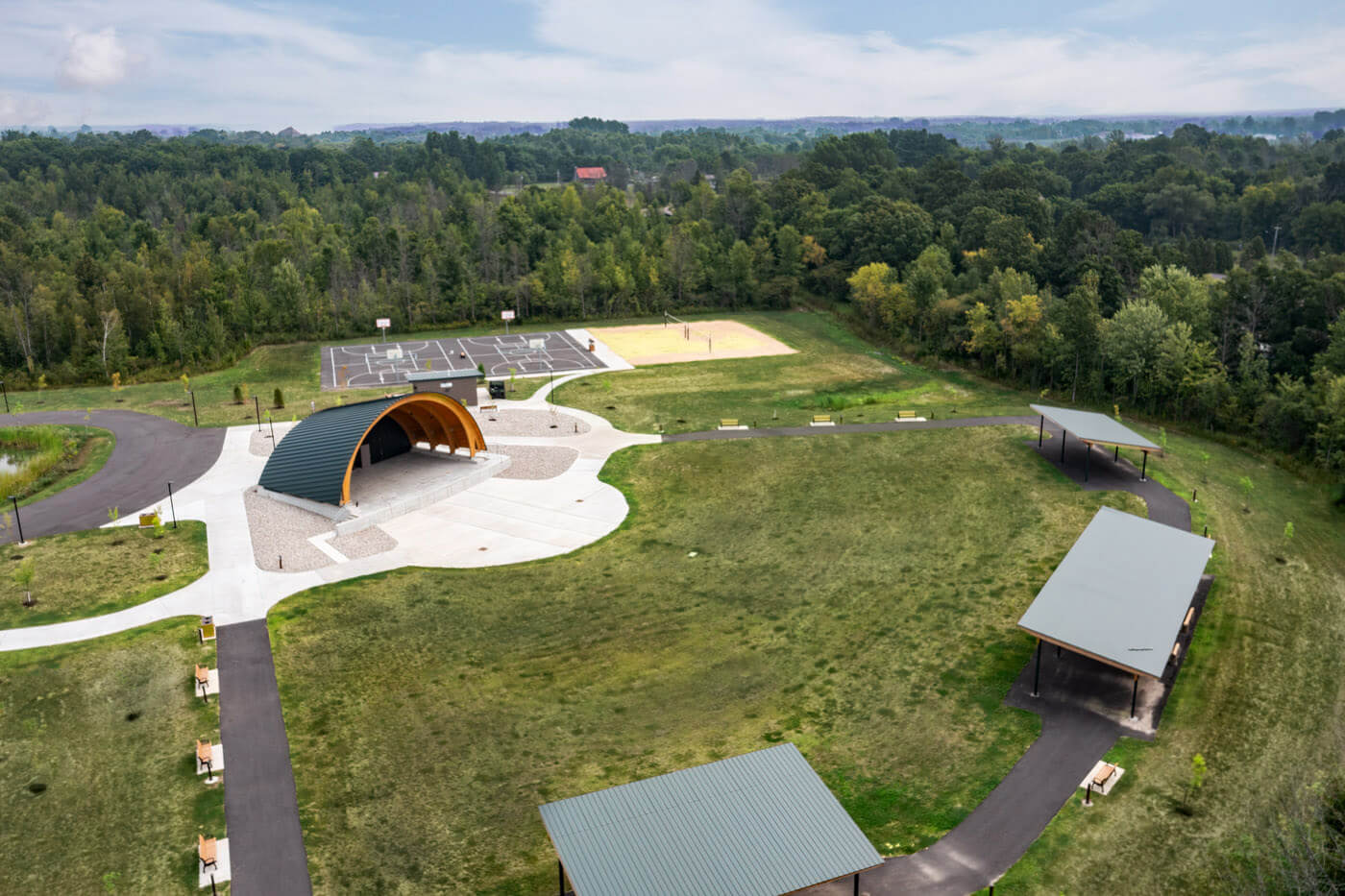
Featured Project: The Amphitheater (Ia’teiewenhnani’haras)
When it came time to design the amphitheater known as Ia’teiewenhnani’haras, meaning “a voice that reaches far away,” we collectively had to think of it beyond a performance venue.
The orientation was carefully accounted for to consider the times of day of concerts, angle of the sun, and overall comfort of performers and audience members. Parking was designed to be flexible, supporting both large events and everyday use through shared access. The site plan includes lawn seating, backstage storage, sport courts, restrooms, accessible pathways, native landscaping, and shaded areas that reflect the community’s deep respect for elders, alongside spaces for children and families.
Like the rest of the Park, the amphitheater evolved throughout design shaped by changing needs and ongoing collaboration with the Tribe.
Episode 1 of Site Stories
This episode offers a look at the conversations, questions, and collaborative process that shape long-term planning. Rather than focusing solely on buildings, it explores the bigger picture: how intentional design can support culture, community, and future generations.
Whether you’re interested in community planning, architecture, engineering, or simply the stories behind master planning projects, this episode of Site Stories gives you an inside look at the ideas that guide our work.